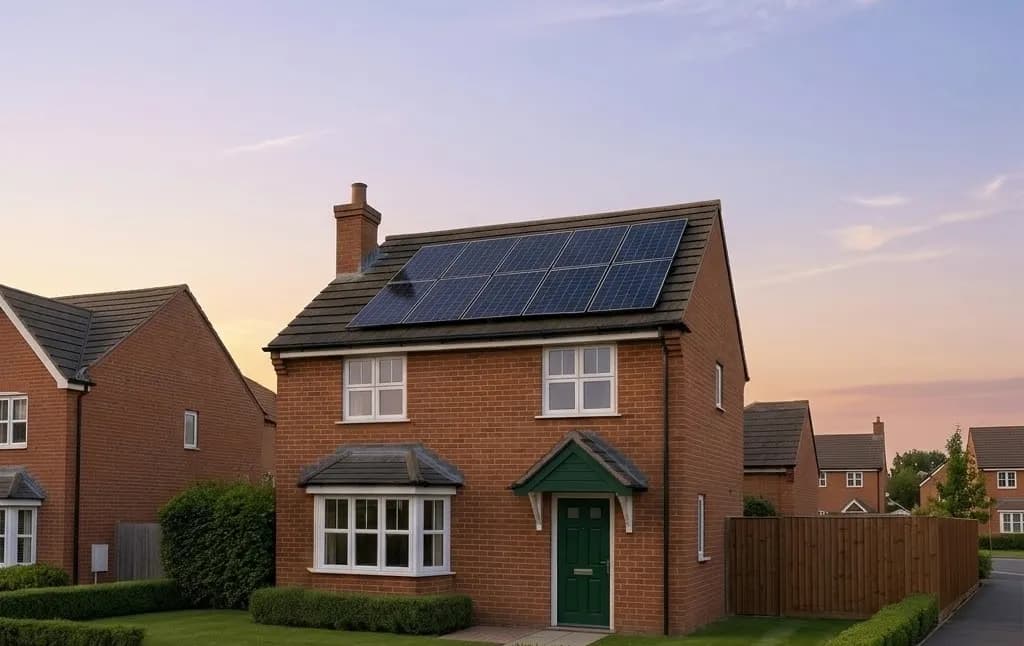
Charge From Solar
Pair your charger with solar generation
If the wider goal is lower motoring cost, the strongest setup is often solar plus a charger configured to use cheap tariff windows and surplus generation well.
Explore this next
OZEV-approved home and workplace charger installation
EV chargers installed properly, with the right charger for how you actually drive.
Our own team fits 7kW smart home chargers and workplace charging across Stirling, Falkirk and Central Scotland — Zappi, Ohme, Hypervolt and similar — with straight advice on tariff setup, cable routing, and any upgrade work the electrics need first.
Itemised online estimate, a message, or a call · No email needed to see the estimate · Prices include VAT
EV Charger
Smart overnight charging
Clean install and tariff setup

7kW
Typical Home Rate
OZEV
Grant Support
£500
Eligible Grant
Local Installer
From the initial survey through cable routing, electrical checks, installation and certification, our in-house team manages the whole job. That keeps the installation aligned with what was surveyed and quoted, with our team available for aftercare.
We cover Stirling and Falkirk along with the towns around them — Bridge of Allan, Dunblane, Bannockburn, Larbert, Grangemouth and Alloa among others — and the wider Central Scotland area.
We check where the car parks, the preferred charger position and the proposed cable route before confirming the fixed quote.
Routed and protected properly rather than taken on the shortest line across the front of the house.
The consumer unit, the earthing arrangement, and what the existing supply is already carrying.
Fitted, tested and commissioned by our own electricians. No middlemen and no outsourced labour.
The electrical certification for the installation, handed over with the charger.
If the charger or its app needs looking at later, you are back to the same team that fitted it.
Why Install One
The real value in a home charger is not just convenience. It is charging at the right time, on the right tariff, through a setup that is actually designed for repeated EV use.
A dedicated 7kW charger is the practical baseline for most EV owners. It is safer, faster, and easier to run around your tariff than a 3-pin plug.
Smart chargers work best when the setup matches the tariff, the car, and how the household actually uses power through the week.
We assess the consumer unit, cable route, parking arrangement, and any required upgrades so the charger is compliant and future-proof.
Grants and Funding
The headline point is simple: ordinary homeowners who own a house are no longer covered, but some other groups still can be. We will tell you which route applies before you commit.
Eligible renters and owner-occupiers in flats can still claim up to £500 per socket, subject to the current OZEV rules and using an approved installer.
Landlords and housing providers may also qualify for grant support where the installation and parking setup meet the scheme requirements.
Businesses, charities, and public-sector organisations can access grant support for multiple sockets where workplace charging is being installed.
If you own a house, the old standard homeowner grant route has ended. The focus is now on choosing the right charger and installation spec rather than chasing funding that no longer applies.
Charger Choices
The strongest option when you want the charger to work with surplus solar generation and divert that energy straight into the car.
A strong smart-tariff charger with good app control and a straightforward setup for households focused on cheap overnight charging.
A clean-looking smart charger choice for customers who want good app features, tidy aesthetics, and a solid overall home-charging setup.
Practical Advice
For most households, a 7kW charger is more than enough for overnight charging. The bigger win is a clean installation, a sensible app setup, and charging on the cheapest tariff window.
A 22kW charger only makes sense where three-phase supply is already available or justified.
Modern chargers with built-in PEN fault detection usually avoid the need for an external earth rod.
If the consumer unit or cable route needs work, it is better to price that honestly than pretend every install is “standard.”
Most common setup
Enough for overnight home charging and usually the right answer for single-phase domestic supply.
Typical upgrade trigger
These are the things that usually change price, not the charger brand alone.
Best long-term setup
The biggest savings usually come from charging cheaply at home and, where relevant, pairing the charger with a solar-aware system like Zappi.
Estimate Online
Most online prices assume a standard installation. We ask a few more questions — charger, parking, cable route, and what your fuse board is already carrying — so the estimate accounts for the things that actually change the price on the day.
Prefer to read the general figure first? The cost guide sets out the typical installed range for a straightforward home job, what is included in that figure, and the assumptions behind it.
Read the EV charger installation cost guideYour charger, where the car parks, the cable route, and the state of the existing fuse board. Usually around three minutes.
An itemised installed price with VAT included, so you can see what each part of the job costs. No email needed to see it.
Optional, and worth doing. They narrow the estimate and cut out most of the calls, emails and photo requests before booking.
We review what you have sent, confirm any additional work, and come back to you with the final quote.
It is built for home installs — a house or flat with private off-street parking. An older fuse board, a longer cable run or an awkward route is fine; it prices those too. For workplace and commercial charging, give us a ring instead.
Good Next Steps
EV charging decisions often connect directly to solar, battery storage, or basic electrical upgrade work. The best result comes from planning those together rather than treating them as separate jobs.
If the wider goal is lower motoring cost, the strongest setup is often solar plus a charger configured to use cheap tariff windows and surplus generation well.
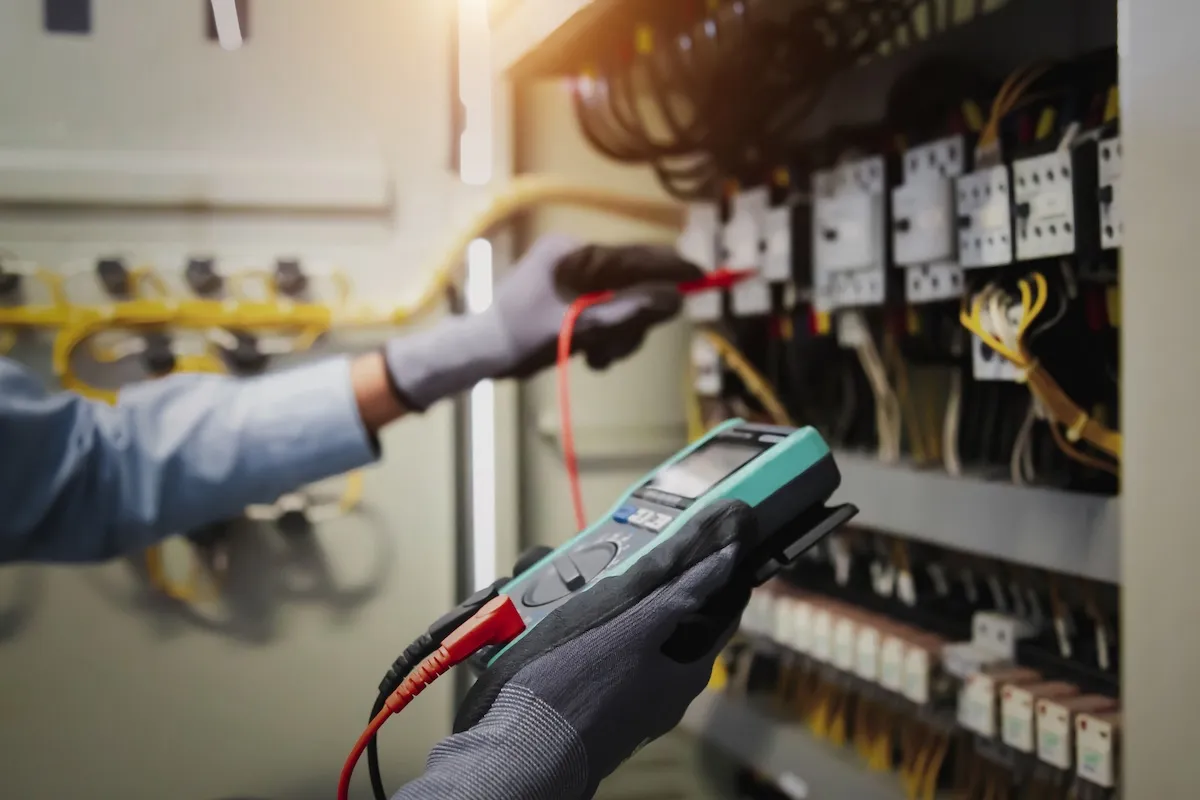
Some installs need board upgrades, new circuits, or a more considered cable route. We handle the electrical work as well as the charger install.
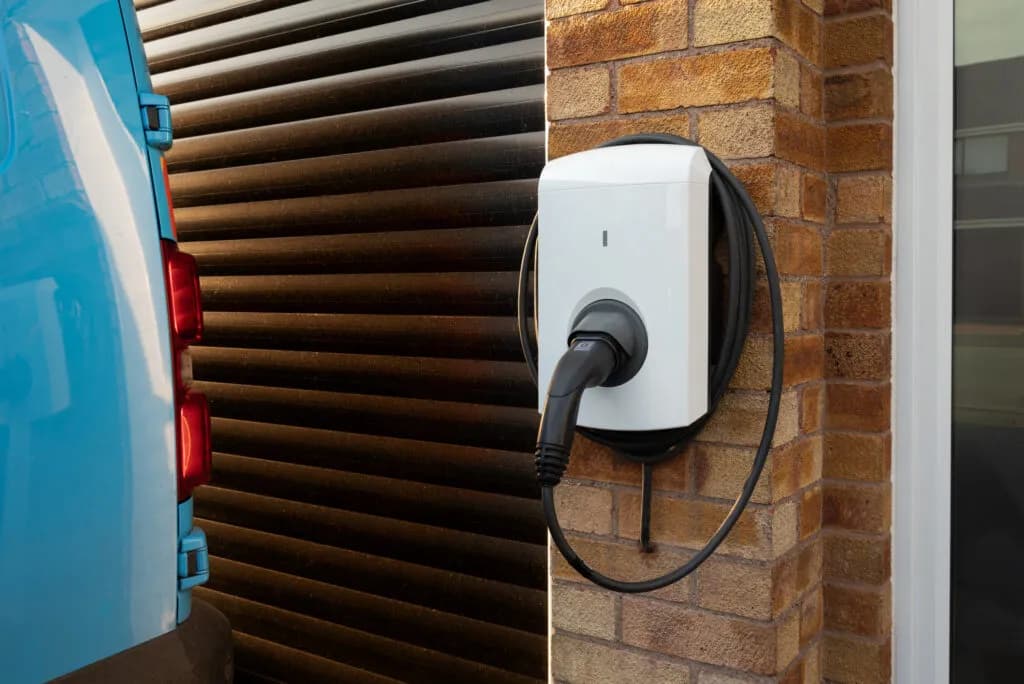
For workplace charging, or if you would rather talk it through, we will look at charger choice, cable distance, parking layout and any upgrade work with you.
How It Works
The process stays simple: assess the setup, quote the right charger, install it properly, and leave you with a working smart charging setup rather than just a wallbox on the house.
We start with how you actually use the vehicle, where it parks, and whether the priority is low running cost, solar integration, or a clean straightforward install.
Most homes only need a well-planned 7kW setup, not something over-specced.
Consumer unit position, cable distance, earthing approach, and charger location all get checked before the quote is finalised.
Any upgrade requirements are explained before installation day.
We fit the charger, complete the protected cable run, and carry out the electrical testing needed for a safe, compliant handover.
Tidy routing and sensible positioning matter as much as the charger brand.
Before handover, we make sure the app, scheduling, and charging modes are configured so the charger is actually useful from day one.
You leave knowing how to charge at the right times for the best cost.
Common Questions
These are the questions we hear most often from drivers planning a home charger or weighing up smart charging and solar integration.
Most straightforward home installs with our recommended Ohme Home Pro 7kW and its 5 metre lead come in around £1,100 to £1,300 including VAT. That assumes a single-phase supply; a house or flat with private off-street parking; wall mounting; up to about 15 metres of cable; an existing board that takes the circuit; and an address within our local travel area. Checked August 2026. Get an itemised online estimate, followed by a fixed quote after survey.
Read the full answerIn most cases, no. Most homes in Scotland have a single-phase electricity supply, which limits charging speed to 7kW (adding about 30 miles of range per hour). A 22kW charger requires a three-phase supply, which is rare in residential properties but common in commercial buildings. However, 7kW is sufficient for overnight charging for almost all EV drivers.
Read the full answerWe strongly advise against using a 3-pin plug for daily charging. It is very slow (10+ hours for a full charge) and can put significant strain on your home's wiring, potentially causing overheating. A dedicated EV charger is much safer, 3-4 times faster, and includes smart features for scheduling and monitoring. Most insurance companies also require a dedicated charger for regular home charging.
Read the full answerIt depends on your needs. The Myenergi Zappi is the best choice if you have solar panels, as it can divert excess solar energy into your car. The Ohme Home Pro is excellent for integration with smart tariffs like Octopus Intelligent Go, saving you money on overnight charging. The Hypervolt Home 3.0 offers a great balance of aesthetics, smart features, and solar compatibility. We install all three and can help you choose the best one for your lifestyle.
Read the full answerNot with modern chargers. Most of the chargers we install (like Zappi, Ohme, and Hypervolt) have built-in 'PEN fault detection' technology, which removes the need for an unsightly earth rod to be installed at your property. This makes the installation neater, cheaper, and safer.
Read the full answerA Zappi charger monitors your home's energy usage and solar generation in real-time. In 'Eco+' mode, it will only charge your car when you are generating excess solar power that would otherwise be sent back to the grid. This means you are effectively driving on free sunshine! If you need a charge quickly, you can switch to 'Fast' mode to pull power from the grid as normal.
Read the full answerThe OZEV grant (EV chargepoint grant) provides up to £500 per socket towards the cost of a charger. It is available for renters, flat owners, and landlords. The grant for standard homeowners (who own a house) has ended. However, the Energy Saving Trust in Scotland sometimes offers additional funding — we can advise on the latest availability during your consultation.
Read the full answerYes, provided you have a dedicated off-street parking space and permission from the land owner/factor. You may also be eligible for the OZEV grant which provides up to £500 per socket towards the cost. Installations in flats can be more complex due to cable routing from your meter, but our experienced team can assess feasibility during a site survey.
Read the full answerIt depends on your tariff. On a standard variable tariff (approx 24p/kWh), a full charge for a typical 60kWh EV costs around £14. However, with a smart EV tariff like Octopus Intelligent Go (7p/kWh overnight), the same charge could cost just £4.20. This is significantly cheaper than petrol or diesel.
Read the full answerYes, we need access to your consumer unit (fuse box) and electricity meter to make the connections. We also need you there at the end of the installation to demonstrate how the charger works, help you set up the app, and hand over the relevant certification.
Read the full answerIf you want to know which charger actually suits your car, tariff, and property layout, the online estimate is the quickest way to see a real price for your setup. Prefer a conversation, or need workplace charging? Book a survey instead.
Live tool
Free calculator using the live Octopus public-API rates for your DNO region. Compare Go, Intelligent Go and Agile against a standard tariff.
Service Coverage
Explore the main areas we cover for home and workplace EV charging, or contact us if your town is nearby and you want to check whether we install there regularly.