Automatic EPS backup for outages, storms, and rural properties
Emergency backup power that keeps the house running when the grid goes down.
Power cuts in rural and weather-exposed parts of Scotland can last far longer than a minor inconvenience. A properly specified battery backup system keeps essential power on automatically, without generators, fuel storage, or manual setup.

~20ms
Typical Switchover
13.5kWh
Common Premium Unit
0%
VAT Relief
Why This Matters
Backup power is about resilience, not just battery capacity.
The important question is not simply how big the battery is. It is whether the system is configured to protect the property in the way you actually need when the grid fails.
Rural and exposed properties can lose power for far longer
If the grid is carried over longer overhead stretches and the area is lower priority for repair crews, outages can easily run well beyond a short inconvenience.
- Storm damage and local faults can leave homes off for hours
- Some rural outages in Scotland run much longer than urban blips
- Waiting it out is rarely practical if the property relies fully on electricity
Heating, lights, refrigeration, and connectivity all go together
Even homes with gas or oil still need electricity for boiler controls, circulation pumps, ignition, routers, and all the other basics people rely on.
- Heating controls fail even when the fuel supply is still there
- Fridges, freezers, routers, and lighting all drop out
- Remote working becomes impossible the moment the supply goes down
The battery isolates from the grid and keeps the home live
A properly configured backup system detects the outage, disconnects safely, and switches the property or protected circuits onto stored energy automatically.
- Automatic switchover without manual intervention
- Whole-home or essential-circuits backup depending on the system
- Solar can recharge the battery during daylight if installed
How It Works
From outage to backup supply in a few clear stages.
The sequence is simple once the system has been specified properly: detect, isolate, switch over, and keep the protected loads running until the grid comes back.
The grid supply fails
Under a normal installation, everything drops out immediately. Backup systems are designed to respond at that point without waiting for you to intervene.
The issue is not the battery itself. It is whether the system is designed for EPS.
The battery detects the outage and isolates safely
The EPS hardware disconnects your home from the grid so engineers are protected and the property can run independently from stored energy.
This is what allows the system to keep supplying power safely.
Stored energy takes over automatically
Within milliseconds, the battery begins powering the house or the protected circuits, depending on how the system has been specified.
Lights, heating controls, fridge, freezer, and internet can stay on.
Solar can extend backup during daylight
If the property has solar, the battery can recharge during the day while the grid is still down, which can make a major difference in longer outages.
This is especially valuable in multi-day outages and rural locations.
What Stays On
Protect the circuits that matter most.
Depending on the system, you may be protecting the whole home or just the most important circuits. In many properties, the essentials are enough to make an outage manageable.
Lighting
LED lighting uses relatively little battery power and is usually one of the most obvious essentials to protect.
Heating controls
Gas and oil boilers still need powered pumps, controls, and ignition, so backup keeps the heating usable during outages.
Fridge and freezer
Food storage stays protected without relying on an outage being over quickly.
Internet and WiFi
Routers and related kit can stay live, which matters for communication and remote work.
Systems We Install
Backup options depend on the system, not just the battery size.
Tesla Powerwall 3
The premium route for whole-home backup. Installed with Tesla's backup gateway, it keeps the whole house running through a power cut, with 13.5kWh per unit and the option to scale further.
- Whole-home backup with Tesla's gateway
- 13.5kWh capacity per unit, scalable further
- Integrated solar inverter and Storm Watch features
Sigenergy SigenStor
A modular route where the backup scope can be tailored. With the Sigen Gateway you can protect the whole house or the circuits that matter most, and bring in a generator for longer outages, as we did at Loch Venachar.
- Backup with the Sigen Gateway
- Whole-home or prioritised circuits
- Generator integration for longer outages
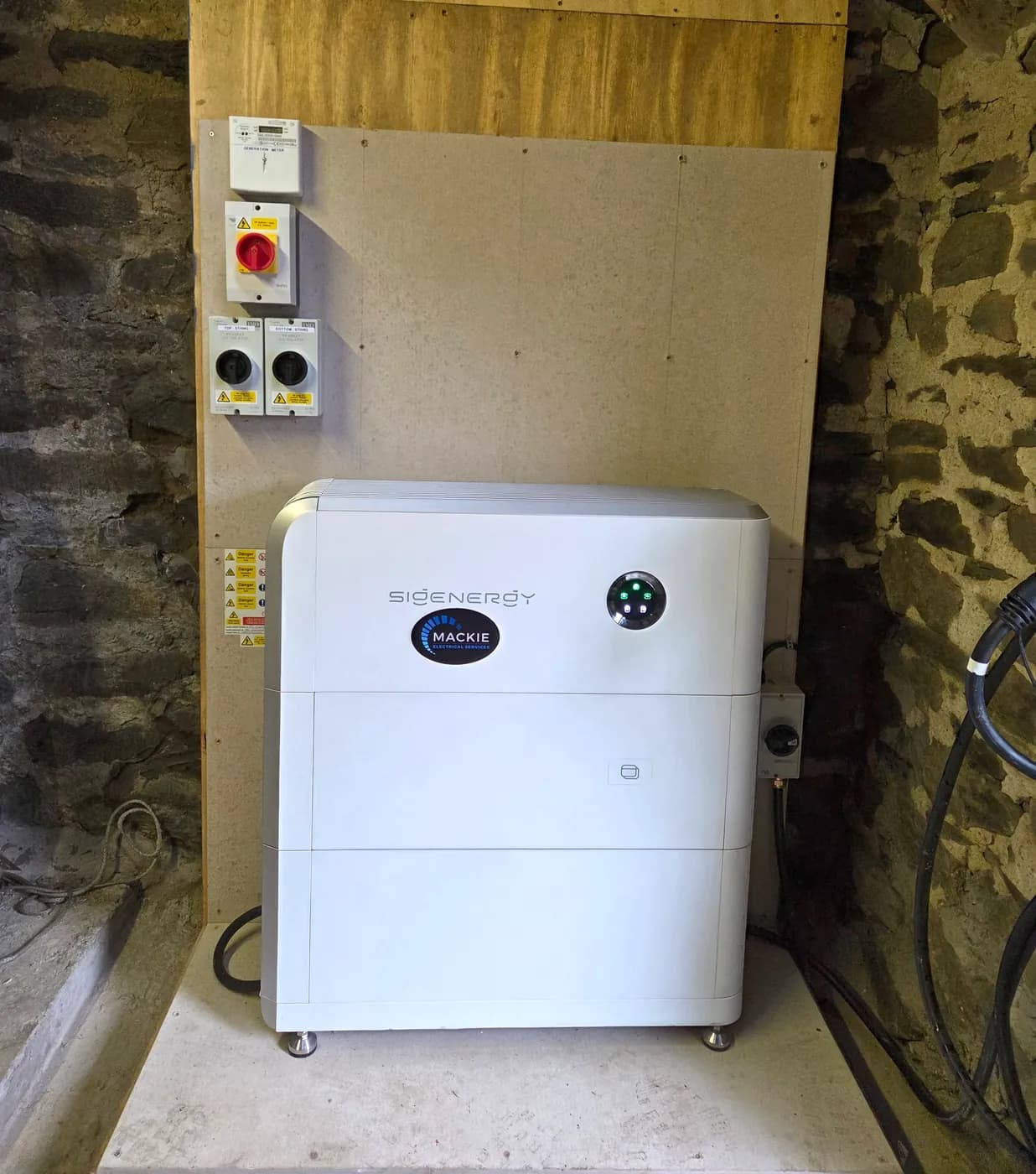
Whole-Home Backup at a Rural Property in Kinlochard
A recent Kinlochard project combined an 8.1 kWp ground-mounted solar PV system with Sigenergy battery storage and a Sigenergy HomeMax whole-home backup gateway, designed to keep the property supplied when the grid goes down.
The property's existing hydro generation was tied into the same inverter as the solar, so there are two sources feeding the battery rather than one — which matters during a long outage, when what you care about is whether anything is still putting charge back in.
It also includes a DC EV charger with vehicle-to-home capability, allowing a compatible electric vehicle to act as a further store of energy for the house.
This one is close to home for us — Kinlochard is where we are based, and it is exactly the kind of rural, exposed property that sees the longest outages. You can read the full project write-up including the ground-mount build.
Battery Vs Generator
Backup power without fuel, noise, or manual setup.
For most homes, a battery is the cleaner and more useful solution because it protects the property automatically and still earns its keep the rest of the year.
Common Questions
Straight answers about EPS, runtime, heating, and retrofit options.
The questions below are the ones people ask when they are trying to work out whether backup power is genuinely worth it for their property and location.
How quickly does the battery switch on during a power cut?
Systems with EPS switch to battery power automatically, typically within around 20 milliseconds. That is fast enough that most appliances will not even notice the grid has gone down. Your lights, fridge, and internet can stay on without you having to do anything.
Read the full answerCan a home battery power my whole house during a power cut?
It depends on the system and how it's installed. Tesla Powerwall 3 with Tesla's backup gateway can run the whole house. Sigenergy with the Sigen Gateway can be set up for the whole house or for a dedicated set of essential circuits.
Read the full answerHow long will my battery keep the house running during an outage?
A typical 13.5kWh battery such as a Tesla Powerwall 3 can run essential circuits for around 12-24 hours depending on usage. If you also have solar panels, the battery can recharge during daylight, which can extend backup significantly during longer outages.
Read the full answerWill my heating work during a power cut with a battery?
Usually yes for gas and oil systems, because the battery can keep boiler controls, pumps, and ignition powered. Electric heating can also be supported, but it uses much more power and will reduce runtime more quickly.
Read the full answerCan I add backup power to an existing battery system?
In many cases, yes. Existing Powerwall installations may already have backup capability, depending on whether the backup gateway was installed, and some other systems can be upgraded with backup hardware. We need to assess the current system to confirm what is possible.
Read the full answerHow much does emergency backup power cost?
A new battery system with EPS typically starts from around £4,000-£6,000 for a smaller standard setup, with larger premium systems costing more. If you already have a compatible battery, adding backup functionality can cost significantly less than a full new install.
Read the full answerIs battery backup power different from a generator?
Yes, and for most homes it is the better option. A battery is silent, starts automatically in milliseconds, needs no fuel, produces no emissions, and is useful every day for solar storage or smart tariff savings. A generator is noisy, fuel-dependent, and usually manual.
Read the full answerIf backup is the priority, the right next step is a survey so we can decide whether you need whole-home backup, critical circuits only, or an EPS retrofit to an existing battery.
Service Coverage
Backup power projects across Central Scotland.
This kind of project is especially relevant in rural or exposed areas, but we advise on backup setups across Central Scotland wherever outage resilience matters.