Home Battery Storage Scotland 2026: Costs, ECO4 Grants & 0% VAT
Home battery storage in Scotland for 2026: realistic costs (£4k-£10k+), ECO4 grant eligibility before it ends 31 December 2026, 0% VAT until March 2027, and why Home Energy Scotland no longer funds batteries.
Home Battery Storage in Scotland: 2026 Costs, ECO4 Grants & 0% VAT
You've embraced solar panels, tapping into cleaner energy for your Scottish home. That's fantastic! But are you finding yourself frustrated watching that valuable solar energy get exported back to the grid for pennies, only to buy expensive electricity later in the evening? Or perhaps you're just starting your solar journey and wondering how to get the absolute most out of your investment while navigating rising energy costs?
Many Scottish homeowners with solar panels face this exact challenge: generating plenty of power when the sun shines, but still relying heavily on costly grid electricity when it doesn't. Getting a home battery storage installation seems like the logical next step, but questions swirl around costs, real-world savings, and the ever-confusing world of grants and funding here in Scotland.
This guide cuts through the noise. We'll explain exactly how solar battery storage works, give you realistic cost expectations for 2026, clarify the current funding situation in Scotland (including the ECO4 extension to December 2026 and what Home Energy Scotland will and won't fund), and show you how a battery can help you slash bills, increase your energy independence, and truly maximise your solar panel investment.
TLDR;
How Does Home Battery Storage Actually Work?
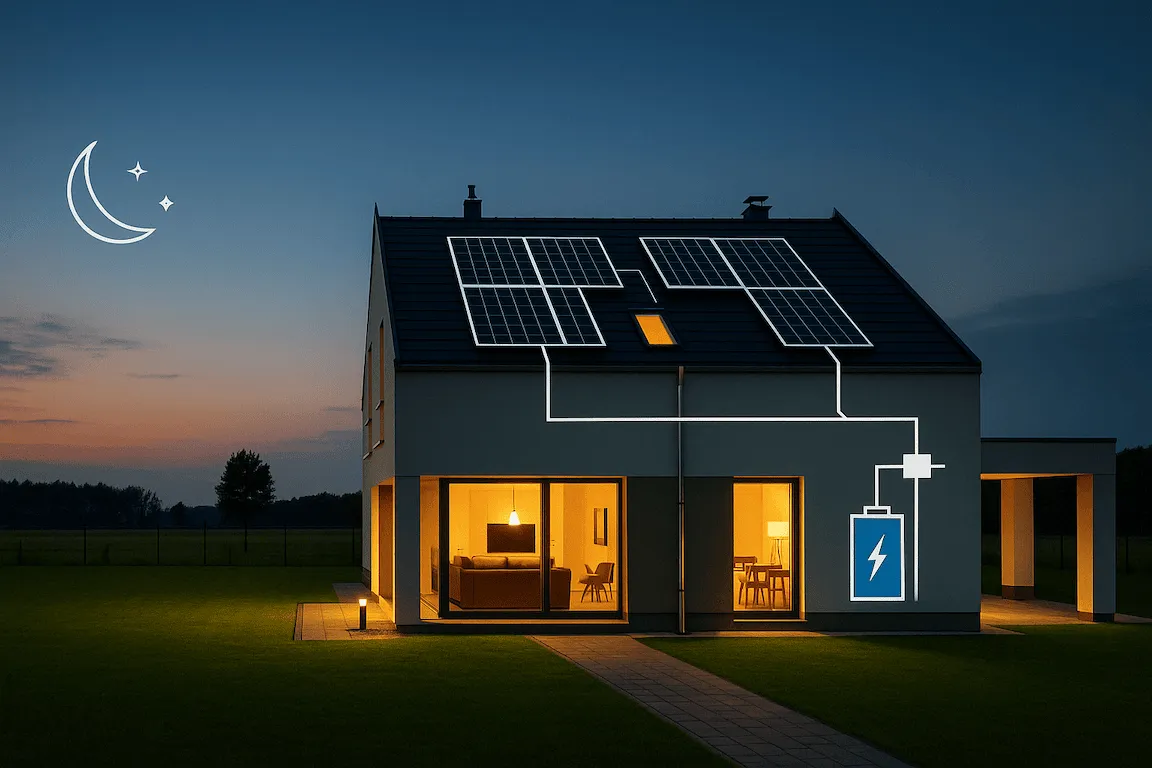
Think of a home battery as a rechargeable power bank specifically for your house, designed to work seamlessly with your solar panels.
- Storing Sunshine: During the day, your solar panels generate electricity (DC power). If you're generating more than your home is using at that moment, instead of exporting all the excess to the grid, the surplus energy is used to charge your battery.
- Powering Your Home Later: When the sun goes down, or on very cloudy days when solar generation drops, your home can automatically start drawing the stored energy from the battery (converted to usable AC power) to run your lights, appliances, TV, etc.
- The Goal: Self-Consumption: The aim is to use as much of your own generated solar power as possible (self-consumption). This dramatically reduces the amount of electricity you need to buy from your supplier, especially during peak evening hours when grid prices are often highest.
There are technical differences in how batteries connect (AC-coupled vs DC-coupled, often using a clever 'hybrid' inverter), but your installer (like us at Mackie Electrical!) handles figuring out the best fit for your setup. It's also worth knowing that standard systems don't typically provide power during a blackout for safety reasons, though specific backup systems can be designed if that's a priority.
What's the Investment? Typical Battery Costs in Scotland (2026)
Let's be upfront: adding a battery is a significant investment, but costs have become more accessible, especially with 0% VAT currently available.
- Battery Unit: Depending on the capacity (measured in kWh – how much energy it holds) and brand, expect costs typically ranging from £4,000 to over £10,000. A popular 5kWh battery might be in the £4k-£6k range, while a larger 10kWh+ unit could be £8k+.
- Installation: Factor in roughly £1,000 - £2,000 for professional installation by qualified electricians.
- Combined Solar + Battery: If getting panels and a battery together, a typical 4kW solar system with a 5kWh battery often lands in the £9,000 - £13,000 region overall. Larger systems (e.g., 6kW solar + 10kWh battery) could be £17,000 - £20,000+.
Important: These are guide prices. The final cost depends heavily on the specific battery model, capacity, your existing electrical setup, installation complexity, and current market prices. Always get a personalised quote based on a home survey.
Funding for Battery Storage in Scotland: The 2026 Reality Check
This is where things have changed recently, so it's crucial to have the latest information.
- Home Energy Scotland Grant and Loan (The Main Scheme): UPDATE: Since June 2024, the interest-free loan and grant funding from Home Energy Scotland is NO LONGER AVAILABLE for solar panels or home battery storage — and as of 2026 that applies even when they're installed alongside a heat pump. The scheme now funds clean heating systems and energy efficiency measures (like insulation) only.
- Action: Home Energy Scotland (0808 808 2282) is still worth a call — their advice is free and impartial, and they can confirm exactly what you qualify for under the current rules. Just don't expect battery funding from them.
- ECO4 Scheme (Energy Company Obligation): This UK-wide scheme is now the main potential route for grant funding for batteries, but only for eligible households. It has been extended and now ends on 31 December 2026 — so if you think you qualify, start the process well before the deadline, because surveys and installations take months to arrange.
- Who qualifies? Generally, low-income households living in properties with poor energy efficiency (EPC rating D-G), often off the mains gas grid, where someone receives specific means-tested benefits.
- What's covered? Primarily insulation and heating systems. Solar PV and battery storage can be included, usually as part of a whole-house package rather than on their own. Funding could potentially cover 100% of costs for those eligible.
- How to apply? Through participating energy suppliers (like British Gas, E.ON, Scottish Power etc.) or accredited ECO4 installers. Eligibility checks and home surveys are required.
- 0% VAT: Good News! The UK government has applied a 0% VAT rate to the installation of energy-saving materials, including solar panels and battery storage. Since February 2024 that covers standalone battery installations too — retrofitting a battery to existing solar, or fitting one with no solar at all, is zero-rated. This runs until March 31st, 2027 (it reverts to 5% after that), and saves you 20% compared to the standard VAT rate.
- Smart Export Guarantee (SEG): This isn't a grant, but a mechanism ensuring large energy suppliers pay you for excess solar electricity you export to the grid. Rates are generally low (often 5p-15p/kWh), making self-consumption via a battery much more financially rewarding.
- Other Funding: Always worth checking with your local council or using resources like Citizens Advice Scotland, but the main national schemes are HES (limited for batteries now) and ECO4 (specific eligibility).
Making it Pay: Savings & Return on Investment (ROI)
So, does the investment stack up? For many Scottish homes, yes – especially if you use electricity smartly.
- The Big Win: Self-Consumption: Using your stored solar energy directly avoids buying electricity at peak rates (often 25p-35p/kWh or more). Compared to exporting it for maybe 5p/kWh via SEG, the energy you store and use yourself is vastly more valuable. This is the primary way batteries save you money.
- Smart Tariff Synergy: Combine your battery with an Economy 7 or a smart time-of-use tariff (like Octopus Go/Intelligent Octopus Go). You can charge the battery with cheap off-peak grid electricity overnight (e.g., 7-10p/kWh) and use that stored energy during expensive peak times, saving money even in winter when solar generation is lower.
- Typical Payback: It varies hugely! Based on costs, usage patterns, and tariffs, estimates often range from 7 to 15 years. Using smart tariffs significantly shortens this. Many homeowners find the payback period falls comfortably within the battery's typical 10-year warranty.
- Overall Savings: How much you reduce your grid reliance depends on your electricity use, roof, system design, battery capacity, and tariff.
Solar Panels, Batteries, and EV Chargers: The Perfect Trio
If you have (or are planning for) an electric vehicle, adding battery storage to your solar PV system makes even more sense:
- Charge Your Car for (Almost) Free: Use stored solar energy or cheap overnight electricity stored in your battery to charge your EV, drastically cutting your 'fuel' costs compared to grid charging at peak rates or using public chargers.
- Manage Higher Demand: An EV significantly increases household electricity consumption. A battery helps manage this demand using stored energy, rather than drawing expensive power from the grid.
- Complete Home Energy System: Combining solar panels (generation), battery storage (management), and an EV charger (consumption) creates a highly efficient, cost-effective, and green home energy ecosystem.
Choosing the Right Battery for Your Scottish Home
Not all batteries are created equal. Key things to consider with your installer:
- Capacity (kWh): How much energy it stores. Should be sized based on your overnight/low-solar energy usage and solar system size (typically 5kWh to 13.5kWh+ for homes).
- Power Rating (kW): How much power it can deliver instantly. Needs to be high enough to run your high-draw appliances simultaneously (e.g., kettle, oven, shower).
- Chemistry: Most are Lithium-ion; LiFePO4 (Lithium Iron Phosphate) is often favoured for its longer lifespan and safety profile.
- Warranty: Look for at least a 10-year warranty. Check the performance guarantee (how much capacity it's guaranteed to retain).
- Brand & Installer Reputation: Choose established brands and experienced, certified installers like Mackie Electrical for reliable installation and support.
Taking the Next Step
Adding home battery storage is a powerful way to take control of your energy bills, maximise your solar panel investment, and live more sustainably in Scotland. While the funding landscape has shifted, options like ECO4 (for eligible households) and the ongoing 0% VAT make it more accessible.
The key is understanding your own energy usage and getting expert advice.
Ready to Unlock Your Solar Potential with Battery Storage?
Find out how a home battery could cut your energy bills and increase self-sufficiency in Scotland. Contact Mackie Electrical for expert advice, system design, and a personalised quote today.
Related Articles
Continue reading with these similar topics
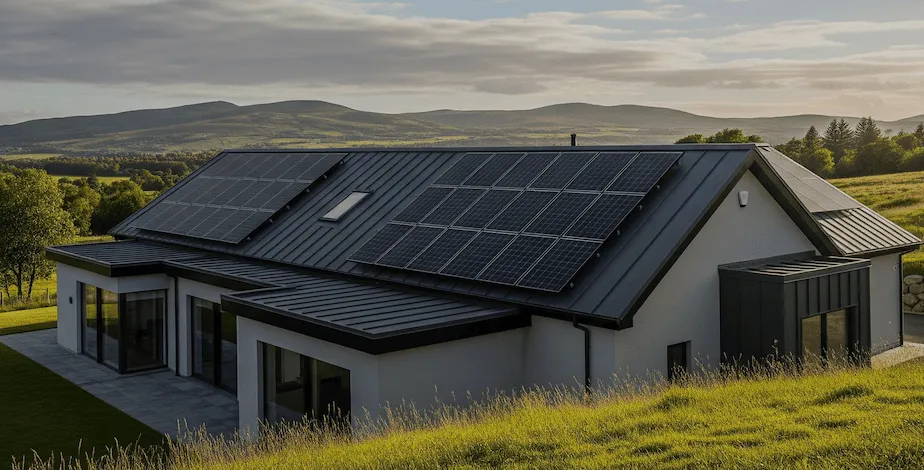
The Ultimate Guide to Solar Panel Installation in Scotland 2026
Your complete 2026 guide to solar panels in Scotland. The funding that's actually available, honest installation costs, SEG payments, ROI, and the step-by-step process.
What's Possible with Solar Panels for Flats and Tenements in Scotland
Complete guide to installing solar panels on flats and tenements in Scotland. Learn about ownership, consent requirements, SolShare systems, costs, grants, and how to get your neighbours on board.
Octopus Flux vs Go vs Intelligent Go in Scotland: Which One Should You Actually Use?
Flux vs Go vs Intelligent Go in Scotland: which Octopus tariff suits solar, batteries and EVs? See live Southern Scotland rates, examples and installer advice.