

Octopus Flux vs Go vs Intelligent Go in Scotland: Which One Should You Actually Use?
Flux vs Go vs Intelligent Go in Scotland: which Octopus tariff suits solar, batteries and EVs? See live Southern Scotland rates, examples and installer advice.
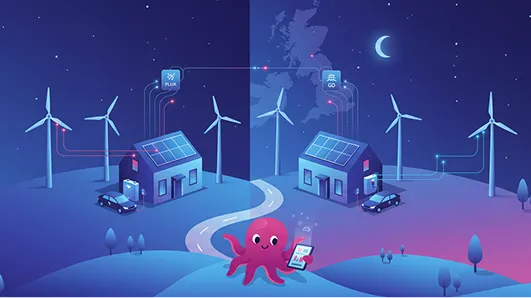
Choosing between Flux, Go and Intelligent Go can get confusing fast. They all sound like they do the same thing, but they are really built for different types of homes.
The simple version is this: the best tariff depends on what you have installed.
Solar only is one thing. Solar with a battery is another. Add an EV into the mix and the answer can change again.
So instead of saying “this tariff is best”, we’ll look at the usual setups we see across Scotland and where each tariff tends to make the most sense.
Quick Summary
- Solar panels + battery, but low-to-moderate EV mileage: Flux or Intelligent Octopus Flux can work well. You can top the battery up cheaply overnight in winter, use stored power during the 16:00–19:00 peak, and sometimes export at the better peak rate in summer.
- High EV mileage: Go or Intelligent Go is often the better starting point. Cheap overnight EV charging can save more than trying to make everything fit around Flux.
- Solar panels but no battery: Flux is not always that useful without a battery. You usually want a decent export tariff for your solar, and if you have an EV, a cheap overnight charging window.
- Battery but no solar: Flux usually is not the one here. You would normally be looking more at Agile, Economy 7-style tariffs, or an EV tariff if you actually qualify for one.
- Rates change all the time: The live rates on this page are pulled from the Octopus API for Southern Scotland, but still check your own Octopus account before switching anything.
The energy price backdrop in Scotland
Electricity prices in Scotland have eased back a wee bit over the last year or so but it's still not what anyone would describe as cheap, especially once you take into account the standing charges and the peak rate which is what is hurting most households in the evening.
The point of time-of-use tariffs like Flux, Go and Intelligent Go is to give you a cheap window for charging up a battery or an EV, and a more expensive window where you should be avoiding pulling from the grid where possible. You aren't reducing your electricity use as such. You are shifting when you actually buy it. The car and the battery do the shifting for you.
If you have solar panels there's a third element on top which is your export. The unit rate Octopus pays for what you send back to the grid depends on which tariff you are on. Flux usually pays its highest export rate during the 16:00 to 19:00 peak window. The rest of the time it pays less. Outgoing Octopus pays a flat rate at all hours of the day. For homes that aren't on Flux but want to be paid for export, Outgoing Octopus is the usual choice and it works alongside Octopus Go or Intelligent Go.
The bit that catches people out is that they'll spend £8,000 or £12,000 on a solar and battery system, then stay on a non-time-of-use tariff like Octopus Tracker or whatever they were on before the install. The whole investment is sitting there doing maybe half of what it could be doing. We see this on maintenance visits, and the fix is usually a tariff switch plus a few changes to the battery schedule.
Sources:
What each tariff is actually for
Octopus Go and Intelligent Octopus Go are the EV tariffs and they're reasonably straightforward. Go has a five-hour cheap window from 00:30 to 05:30 every night, and a flat day rate the rest of the time. You schedule the car to charge during the cheap window either through the charger app or through the car's own scheduling. That is more or less the whole tariff. Intelligent Go is the smarter version where Octopus controls the charging schedule for you, with up to 6 hours of super-cheap smart charging every 24 hours subject to Octopus rules and compatibility. Zappi, Hypervolt and Ohme chargers are commonly used with these tariffs, but still check the current Octopus compatibility list before switching.
Octopus Flux is the tariff for homes that have solar plus a battery. There is a cheap import window overnight from 02:00 to 05:00. There's the same expensive peak window in the evening from 16:00 to 19:00. Standard rates apply the rest of the time. The export side of Flux mirrors the import side which is the bit that makes it clever. You're paid a low rate during the cheap import window, a standard rate during standard hours, and a much higher rate during the 16:00 to 19:00 peak when demand on the grid is usually higher. The whole thing depends on you having a battery to play with. Without a battery you can't shift the cheap overnight electricity into the expensive evening window because you've nowhere to store it. We've had customers in Stirling and Falkirk move onto Flux thinking the cheap overnight window alone would make it worthwhile. In both cases it didn't. The day rate and peak rate wiped out the overnight saving, and they moved back to a standard import tariff after a couple of months.
Intelligent Octopus Flux is the smart-controlled version of Flux where Octopus can optimise the battery schedule based on pricing and grid conditions. Intelligent Flux can be worth looking at if your inverter is on the compatible list. Octopus currently lists GivEnergy, Enphase, SolarEdge and Tesla Powerwall batteries, but it still depends on the exact battery, inverter, firmware and integration status.
Octopus compatibility and tariff notes:
A note on Scottish regions before getting to numbers
The rates Octopus quote depend on which DNO region the property is in. Stirling, Dunblane, Bridge of Allan, Falkirk, Glasgow, Linlithgow, Livingston, Edinburgh and most of the rest of the Central Belt all sit in SP Energy Networks' Southern Scotland region. Further north - Pitlochry, Aberdeen, the Highlands, the Islands - you'll be in SSEN's Northern Scotland region instead.
The tariff names stay the same across both regions but the unit rates and the standing charges are different. The live rates table below is for Southern Scotland. If you're up north it's worth logging into your own Octopus account and checking the rates you're actually being quoted before acting on anything in this article.
Pulled straight from the Octopus public API for the SP Energy Networks region, refreshed every hour. All figures are pence per kWh including VAT.
Octopus Flux — import
Buy from the grid. Charge in the cheap window, avoid the peak.
| Time band (UK) | Window | Rate |
|---|---|---|
| Cheap window | 02:00–05:00 | 14.27p/kWh |
| Standard | 05:00–16:00 | 23.77p/kWh |
| Peak window | 16:00–19:00 | 33.28p/kWh |
| Standard | 19:00–02:00 | 23.77p/kWh |
| Standing charge | Daily | 59.84p/day |
Octopus Flux — export
Sell to the grid. Peak export pays nearly 3× the standard rate.
| Time band (UK) | Window | Rate |
|---|---|---|
| Low window | 02:00–05:00 | 4.42p/kWh |
| Standard | 05:00–16:00 | 9.55p/kWh |
| Peak export | 16:00–19:00 | 27.19p/kWh |
| Standard | 19:00–02:00 | 9.55p/kWh |
Outgoing Octopus — flat export
Simple flat-rate SEG. Used as a baseline against Flux and Agile Outgoing.
| Time band (UK) | Window | Rate |
|---|---|---|
| Flat rate | 00:00–24:00 | 12.00p/kWh |
Octopus Go — EV import
Five-hour cheap overnight window for EV charging, flat day rate.
| Time band (UK) | Window | Rate |
|---|---|---|
| Cheap window | 00:30–05:30 | 9.05p/kWh |
| Peak window | 05:30–00:30 | 30.62p/kWh |
| Standing charge | Daily | 59.84p/day |
Intelligent Octopus Go — EV import
Smart-charged variant with a core overnight cheap window and possible extra smart slots.
| Time band (UK) | Window | Rate |
|---|---|---|
| Peak window | 05:30–23:30 | 30.62p/kWh |
| Cheap window | 23:30–05:30 | 7.62p/kWh |
| Standing charge | Daily | 59.84p/day |
Octopus Agile — half-hourly
Live · Southern ScotlandPrices change every 30 minutes. Tomorrow's slots publish around 16:00 UK.
Last refreshed: 3 Oct 2026, 12:07. Live data straight from Octopus Energy. Always confirm in your Octopus app before switching tariffs.
The setups we see across Scotland
This is where the answer depends on the house. A few examples make it easier to explain.
A commuter from Bridge of Allan driving into Glasgow every day, doing around 250 miles a week, is usually a Go or Intelligent Go customer first. The EV is the main load in the house. If most of that charging can happen overnight at 8p to 9.5p per kWh, that can save far more than trying to make Flux fit a house with no solar or battery.
A family in Dunblane with a 4.5kWp solar array, a 9.5kWh battery, two parents working from home and no EV is a natural Flux fit. Solar covers a lot of the daytime load in brighter months, the battery handles the evening peak, and overnight top-ups help in winter. This is the kind of setup where Flux can work well, especially if there is enough evening use to justify the battery cycling.
A family in Linlithgow with similar solar and battery but two EVs on the driveway is different. Flux becomes less appealing because the cars need more cheap charging time than Flux's three-hour window can supply. We'd usually look at Intelligent Go here, with the cars charging overnight and the battery cycling on the same cheap rate. The export side matters less because the cars and house soak up a lot of the solar.
A retired customer in Falkirk with solar, modest daytime use and no battery is usually not a Flux customer. They would be paying the 16:00 to 19:00 peak rate every evening with no stored energy to fall back on. For that kind of setup, a normal Octopus import tariff paired with Outgoing Octopus for the export side usually makes more sense. Then, if a battery gets added later, the tariff can be looked at again.
A standalone battery install in Linlithgow is another case again. Battery-only installs are becoming more common since 0% VAT on standalone storage came in, but Flux is usually not the tariff I'd start with because there is no solar export to work with.
For battery-only, Agile import can be worth looking at, especially if the customer is happy with a tariff that moves around and the battery can be scheduled properly. Some nights the cheap windows can be very good, but it is not as simple as a fixed overnight rate. If someone wants a more "set it and forget it" setup, Agile might not suit them.
That is why we do not really pick the tariff until we know the house. Same equipment, different usage, different answer.
Getting the settings right is at least half the job
Some of the worst-performing systems we go in to look at aren't badly installed. The kit is fine. The tariff is often fine. The settings in the app are just working against the customer.
The biggest one we see on Flux installs is the battery charging from the grid in summer when it should be leaving headroom for solar. A lot of customers leave the battery's charge and discharge schedules on winter defaults all year. The battery fills overnight, then by 9am the solar has nowhere to go and gets exported at the standard rate. The fix is usually to cap overnight charging to around 30% in brighter months, or disable it between April and September. A MyEnergi Eddi or Solic 200 can also send surplus solar to the hot water cylinder instead of exporting it for a poor rate.
Reserve settings on the battery matter too. A common default is 20% reserve, which means the battery won't discharge below 20% state of charge. This is fine for most homes, but if the household uses a lot of power during the peak window the reserve may need to be lowered to make use of more of the battery's usable capacity. We've also seen the opposite issue where the reserve is set too low and the battery is running flat by 7pm, then the household ends up pulling expensive grid electricity until the next cheap window opens at 02:00.
For EV chargers, the charge schedule needs to match the cheap tariff window. Zappi, Hypervolt and Ohme all handle this slightly differently in their apps or Octopus integrations. The CT clamp placement is critical too. If the clamp is on the wrong wire, the charger can read grid imports as solar surplus and pull expensive grid power thinking that it's free. We've fixed this exact issue on jobs originally done by other installers. Once the clamp is on the correct cable, eco mode works as intended.
The home battery charging the EV through the day is another classic problem. Say the battery's emptying itself into the car every afternoon while nobody's home, so there's nothing left for the evening peak. The Zappi's in eco mode, but the CT clamp's the wrong way round and battery discharge looks like solar generation to the charger. Move the clamp to the meter tails, set the charger to run only in the cheap window overnight, and the battery goes back to doing its job.
Export limits are boring but they matter for G98 and G99 compliance. For a typical single-phase domestic setup, G98 is usually up to 3.68kW, or 16A per phase. If the inverter and battery can push more than that, you either need G99 approval from SP Energy Networks or the export limit needs to be properly set in the inverter. We handle G99 paperwork on our own installs, but older systems and installs by others are worth checking.
On VAT, grants and what the funding picture actually looks like
The 0% VAT rate on installed energy-saving materials is in place until 31 March 2027. This covers solar PV, battery storage including standalone battery storage with no solar, heat pumps, smart diverters like the MyEnergi Eddi, and a number of other items. On a larger install, the VAT relief can still make a noticeable difference to the final price. After 31 March 2027 the VAT rate is currently expected to go back up to 5%, unless the relief gets extended.
Home Energy Scotland and the Energy Saving Trust were funding routes for solar and battery installs but that has changed in the last couple of years. Applicants who received a Home Energy Scotland Grant and Loan application link after 6 June 2024 are no longer eligible for funding for solar PV or energy storage systems. There is still funding available through HES for clean heating measures like air source and ground source heat pumps, and for fabric upgrades like insulation, but the days of getting an interest-free loan from HES for a solar and battery install are gone for the time being. It's worth checking the HES website though because eligibility criteria do change from time to time.
ECO4 is the other route worth being aware of. This is the Energy Company Obligation scheme administered by Ofgem and it's targeted at lower-income households and fuel poverty cases. Battery storage can be funded as part of a broader package which usually has to include heating measures or insulation work as well. It's not a route to a free standalone battery for most people, but if the household qualifies on the income or benefits side it's worth having a five-minute conversation with one of the ECO4 administrators to see if a package can be put together.
Funding & VAT sources:
So which tariff should you actually go for?
For most customers the answer is reasonably clear once you map out what they actually have installed and what their usage pattern looks like through the day.
- Heavy EV mileage, with or without solar: Octopus Go or Intelligent Octopus Go.
- Solar plus battery, moderate EV use or no EV: Flux or Intelligent Flux, depending on compatibility.
- Solar only with no battery: standard import tariff plus Outgoing Octopus fixed export.
- Battery only with no solar: Agile import with Outgoing Octopus can be worth looking at, but it depends on how actively the battery is being managed.
These aren't the only answers - V2G compatible cars on the Octopus Power Pack tariff, three-phase supplies, heat pumps pulling serious load through the day, and some other less common setups can shift the maths. We work through this on a case by case basis at survey for new install customers, and during review visits for existing customers.
Mackie Electrical install MCS-certified solar and battery systems, along with EV chargers, across Stirling, Dunblane, Falkirk, Perth, Linlithgow and the Lothians. We'll usually do a quick tariff review as part of any new install survey at no extra cost.
FAQs
Frequently Asked Questions
Got questions about pairing Octopus tariffs with solar, batteries and EVs in Scotland? Here are the answers our installers give most often.
Need help choosing and configuring your tariff?
Our NICEIC and MCS-approved team installs and configures solar PV, batteries and EV chargers across Stirling, Glasgow, Falkirk, Perth and West/Central Scotland - and we’ll set up your system for Flux or Go.
Serving Central & West Scotland: Stirling, Perth, Falkirk, Dunbartonshire, Glasgow and beyond.
Related Articles
Continue reading with these similar topics
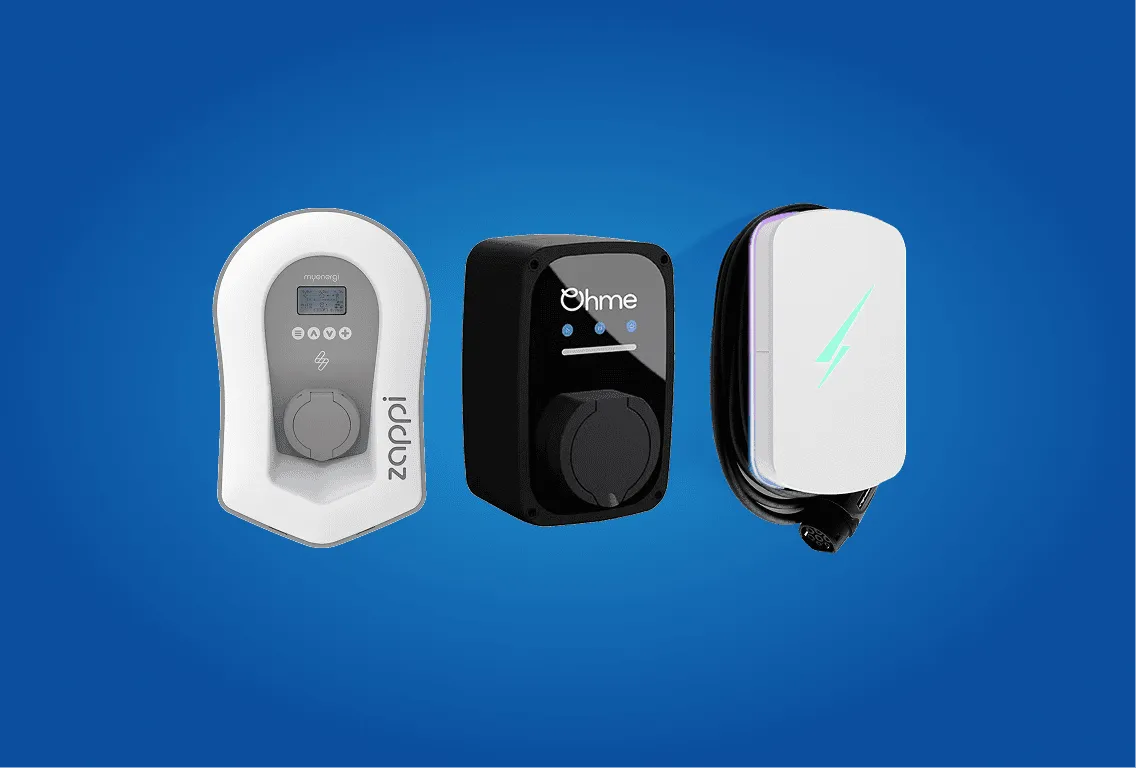
Zappi, Hypervolt or Ohme: the right EV charger for a solar home in Scotland
A guide for Scottish homes with solar. We compare Zappi, Hypervolt and Ohme with a focus on surplus PV charging, CT clamps, PEN protection, load management, apps, weather, and flats/tenements.
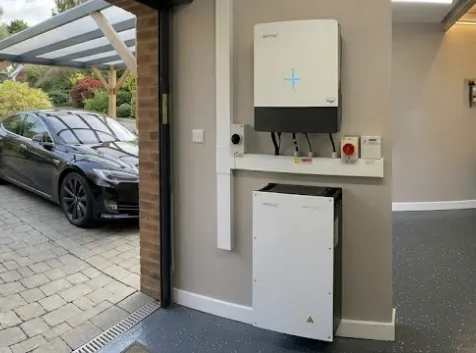
No Solar Panels? You Can Still Install Home Battery Storage in Scotland
A guide to standalone home batteries, smart tariffs, and what installers check before fitting one.

Home Battery Storage Scotland 2026: Costs, ECO4 Grants & 0% VAT
Home battery storage in Scotland for 2026: realistic costs (£4k-£10k+), ECO4 grant eligibility before it ends 31 December 2026, 0% VAT until March 2027, and why Home Energy Scotland no longer funds batteries.