

How Much Does It Cost to Rewire a House in Scotland? (2026)
Straight answer from a Central Scotland electrician on house rewire costs, timescales, warning signs, certification, and whether it makes sense to future-proof for EV, solar, and battery storage.
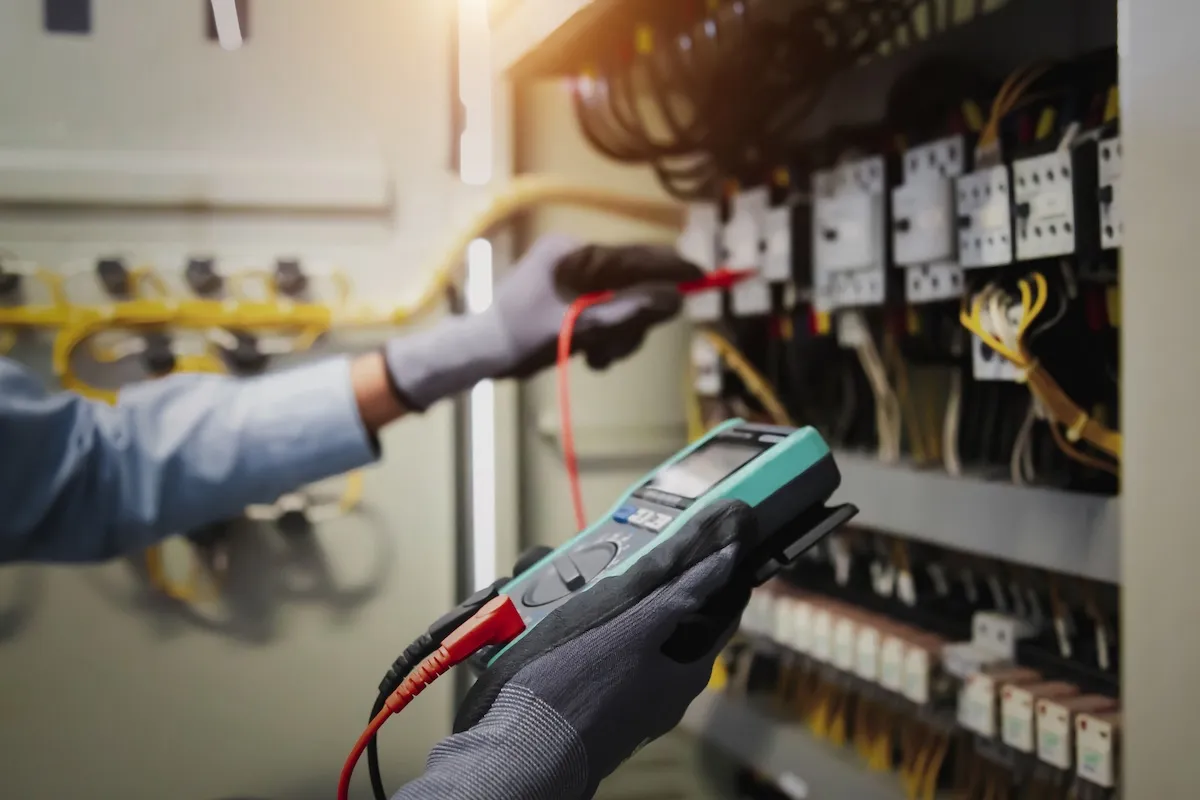
How Much Does It Cost to Rewire a House in Scotland? (2026)
It's easy to get lost in the numbers when there is so much conflicting information out there regarding the cost of house rewires in Scotland. The result can be delaying important rewiring decisions because you don't know where to look or who to turn to. A quick example of a full house rewiring that we carried out for a three bed, one bathroom. FK7 postcode, standard layout for this area. The cost of the full rewire over the course of 6 days was £4,800.
So, there's a rough guide. However, yours may be different and you'll find out why once you read on.
Quick Answer
So, £3,500 to £6,000
That's for a 3 bed property. This is the number that we have on our house rewiring page. The house in Stirling that we quoted £4,800 for was empty, had a loft with proper head room and the first floors were timber so we could pull cable through joists without fighting anything. Not too complex a job. However other jobs may have more complex hurdles so can cost more, for example a job that we had done in Falkirk was £7,200 because the owner wanted the full works. Every room rewired, full RCBO board not just dual RCD, new downlight positions in every ceiling, outdoor doubles on the front and the back wall, 10mm T&E run to the driveway for a Zappi later on, spare ways left on the consumer unit for solar and a GivEnergy 9.5kWh. Pretty much a brand new electrical installation from scratch. NICEIC state the big cost factors are the size of the property, its age and condition and whether it's a full or partial rewire.
Sources for the cost range and timescale:
Have a look at your consumer unit
No need to take any covers off. Now check your fuse wires, can you see the wires stretched between screws on wee ceramic carriers? If so, that board is from the 70s. Maybe the 80s. The cable behind it is PVC twin and earth if somebody's been in since, rubber insulation if nobody has. I pulled rubber cable out of a house in Aberfoyle two months ago that crumbled in my hand like a dried leaf, no exaggeration, the insulation just fell off the conductor. Twenty-odd years that had been sitting in a joist space doing its thing. Twenty years.
When we rewire we strip all that back. New 2.5mm T&E for sockets, 1.5mm for lights, clipped through joists properly. New circuit design to BS 7671 18th Edition, ring finals split per floor, dedicated radials for the kitchen and anything pulling real current, lighting per floor, alarms on their own circuit. Consumer unit goes in, usually dual RCD split-load or full RCBO if the client wants individual protection per circuit. Then second fix, your sockets and switches and whatever fittings you've picked. Then we test everything, insulation resistance, continuity, loop impedance, RCD trip times. Certify it. Hand it over.
Five to ten days of graft depending on the house.
Empty house vs lived-in house
This is the single biggest thing that moves the price. I keep saying it because people keep not hearing it.
Bridge of Allan, 3-bed ex-rental, landlord had already lifted the carpets. We walked in Monday morning and walked out Friday afternoon. Five days. Nobody's furniture to shift, no power to put back on by teatime, no dust sheets because there was nothing in the rooms to protect. Just cable and boards and a radio.
Dunblane, three weeks later. Same era of house, same kind of wiring coming out, same sort of floor construction. Nine days. NINE. Because the family was living in it. We had to restore power every single evening so they could cook and run the boiler. Every room got sheeted up before we lifted a board. There was a wardrobe in the main bedroom, must have been Victorian oak or something, the owner didn't want it moved because it was her mother's. Fair enough. But we had to route cable around it instead of through the wall behind it and that wardrobe probably added half a day on its own, I'm not even joking.
Look, if you've just bought a place and you're not in yet, get the rewire done before you bring anything through the front door. £800 to £1,200 difference in labour because we don't have to tiptoe around your life. That's real money.
You might not even need one
Here's the thing though.
We went to a mid-terrace in Callander last year, the owner was convinced the whole place needed ripped out because the lights dimmed when the washing machine ran. She'd already told her husband it was going to cost five grand. Turned out the wiring was fine. Tested well on insulation resistance, earth continuity within spec, cable in decent nick. The consumer unit was the problem. Rewireable fuses, zero RCD protection, main switch had a crack right through the front of it. Swapped the board, fixed two dodgy junction box connections up in the loft, £900. That's it. NOT a rewire.
Get an EICR first.
Costs about £200 and takes a couple of hours. Electrical Safety First say you should have one every ten years if you own the place. We've done EICRs that saved people three or four grand because the wiring turned out to be way better than they expected and all they needed was a board and some remedial work.
But there's a version of this where you walk into a house and you just know. Brown stains around switches. Hot sockets. That warm plastic smell you get from PVC that's been overheating. Extension leads plugged into extension leads because the whole house has about six sockets. When it's that far gone you're not really inspecting, you're just writing down what everyone already knows.
Inspection guidance:
Access
Detached house in Dollar, clear loft void, pine floorboards upstairs? Cable routes obvious, everything accessible, the job flows and we're in and out. Ground floor flat in Stirling Old Town with solid floors and stone party walls and service voids that don't actually exist? Different planet. We're chasing masonry, drilling through 400mm of stone, running mini trunking on surfaces where we can't get behind the plaster. A job that would be four grand in an accessible house goes past five and a half in one where every single cable route is a fight. Not much you can do about it, the house is what it is. But you should know that going in.
Board swap or full rewire
Covered this properly in our fuse box guide for EV chargers so I won't repeat the whole thing.
Short version: old board does NOT mean full rewire. We swap consumer units regularly where the cable behind the board tests fine. New dual RCD or RCBO board, 100A main switch, everything labelled, £500 to £800. Compare that to four grand plus for the full job.
Other way round catches people too. Someone rings up wanting just a board swap. We open the consumer unit and the meter tails are 16mm when they need to be 25mm, there's a junction box behind the board that looks like it was wired by someone in the dark about thirty years ago, and the cable going into the walls is VIR that they stopped manufacturing before I was born. Sticking a new board on top of all that is putting a fresh coat of paint on a condemned building. Looks great from the outside. Changes nothing.
Sort the extras while the house is open
If you intend on having more works carried out at a later stage, like EV chargers, solar installs then it's best you consider the provisions now. This will save you money down the line. Think whilst the floors are up and joists exposed. We're already there, so running extra cable at this point costs almost nothing compared to coming back later. Like feeding a 10mm cable to the driveway now for your EV later, costs about £80 in cable and only 20 minutes or so whilst the joist space is open. This same cable run after the floorboards are screwed down and the plaster's been skimmed and painted will now require a separate visit, an additional £400-£500 for the same twenty minute job. So, it's best to consider this during your rewire to not regret paying extra at a later stage.
A 6mm radial to the garage for a bench grinder and whatever else. Outdoor doubles on the patio so you stop threading an extension lead through the kitchen window for the pressure washer. A 32A radial prepped for a battery inverter. Cat6 drops while the joists are visible because trying to retrofit ethernet through a finished house is absolutely horrible.
And interlinked alarms. Scotland's had the law on interlinked smoke and heat detectors since February 2022 and if yours are still battery Kidde units from B&Q stuck on with adhesive pads, this is when you hardwire them on a dedicated circuit. About £150 on top of the rewire. Versus a standalone alarm job afterwards which means drilling through finished ceilings and running cable across decorated rooms.
We do EV chargers, solar PV, and battery storage as well as rewiring, so we plan the consumer unit layout with future capacity already in mind. Not as an upsell. Because it makes zero sense to fit a brand new board and max out every way on day one when you know the client's probably getting an EV in 2028.
Scottish fire alarm guidance:
Paperwork in Scotland
You get an Electrical Installation Certificate to BS 7671 18th Edition. Any NICEIC or NAPIT registered electrician provides one. Confirms the installation was designed, installed, inspected and tested to current standards. You need it when you sell, sometimes when you remortgage, and your solicitor will ask for it at the worst possible moment if you haven't got it filed.
Building warrants are where Scotland gets specific. Electrical Safety First say work under a building warrant needs approval from a registered installer or the local authority. Flats, maisonettes, houses over two storeys are more likely to fall within the rules. A standard two-storey house with a like-for-like rewire might not need one. We confirm the route with every client before we start because the last thing anyone wants is a solicitor asking for a Certificate of Construction eighteen months after the job's done and nobody applied for it. Eighteen months. Happened to a client of ours in Falkirk. Not fun.
Scottish certification and warrant guidance:
What to budget
For a 3-bed in the Stirling, Falkirk, Bridge of Allan, Perth sort of area, budget £4,000 to £5,500 as your working number. Under that if the house is empty and straightforward. Over that if you're adding EV prep, outdoor circuits, a garage feed, or staying in the house during the work.
Get an EICR first. Costs about £200 and it might save you the entire rewire if the installation turns out to be better than you thought. If it confirms you need the full job, at least you're deciding from test results and not from a 2am panic scroll through Mumsnet.
And if you're going to do it, do it once. Plan the board for where you'll be in five years not where you are right now. Run the cable routes while the floors are up. Get the smoke alarms sorted. Don't come back in eighteen months to open everything up again for an EV charger or a GivEnergy battery when we could have prepped for it the first time round. Eighteen months. We see it more than you'd think.
If backup power is on your mind we wrote a separate piece on home battery backup in Scotland that covers what actually keeps the lights on when SSEN or SP Energy Networks have a wobble.
Need a straight answer on your rewire?
We can inspect the installation, tell you whether you're looking at remedial work, a consumer unit upgrade, or a full rewire, and price it properly. NICEIC-approved electricians covering Stirling, Perth, Falkirk, Dunbartonshire and wider Central Scotland.
Frequently Asked Questions About House Rewiring Costs in Scotland
Clear answers on rewire pricing, timescales, fuse boxes, occupancy, and future-proofing for modern electrical upgrades.
Related Articles
Continue reading with these similar topics
Do You Need a Fuse Box Upgrade for Your EV Charger?
A straight answer for Scottish homeowners on when an EV charger install needs a consumer unit upgrade, what BS 7671 Section 722 requires, and what it really costs.

Home Battery Storage Scotland 2026: Costs, ECO4 Grants & 0% VAT
Home battery storage in Scotland for 2026: realistic costs (£4k-£10k+), ECO4 grant eligibility before it ends 31 December 2026, 0% VAT until March 2027, and why Home Energy Scotland no longer funds batteries.

Arc Fault Detection Devices (AFDDs): What Scottish Homeowners Need to Know in 2025
Discover why AFDDs are revolutionising electrical safety in Scottish homes. Learn about new regulations, costs, benefits, and whether you need these smart fire-prevention devices.