

Do You Need a Fuse Box Upgrade for Your EV Charger?
A straight answer for Scottish homeowners on when an EV charger install needs a consumer unit upgrade, what BS 7671 Section 722 requires, and what it really costs.
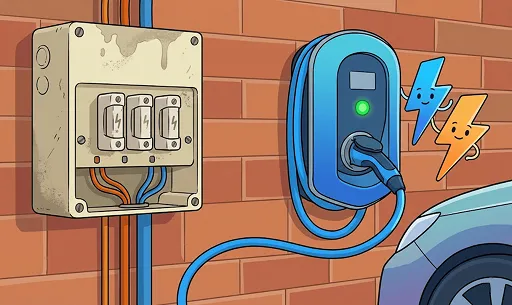
Do You Need a Fuse Box Upgrade for Your EV Charger?
You've done the sums on petrol versus electric, maybe even test-driven something, and now you're pricing up home chargers. Then someone tells you that your fuse box is too old and you'll need the whole thing ripped out before anyone will touch the install. Your £800 charger project just became a £1,600 headache and you haven't even picked a charger yet.
It's the most common question we get asked before an EV charger installation survey. So let's go through what actually matters.
Quick Summary
The age of your board doesn't tell you much
This surprises people. An old consumer unit with rewireable fuses isn't automatically unsafe and a modern board with MCBs isn't automatically ready for an EV circuit. We've surveyed houses with fuse wire boards from the 80s where the installation was perfectly sound and we've walked into properties with boards fitted five years ago that were a mess. The age of the box on its own tells you almost nothing about whether it can take an EV charger.
What maers is whether your existing setup can accommodate a dedicated EV charging circuit that meets BS 7671 Section 722. That's the section of the wiring regulations that covers EV charging specifically and it came into force with Amendment 1:2020. Every chargepoint installed after July 2020 has to comply with it.
What Section 722 actually requires
The charger needs its own RCD protection, minimum Type A, 30 milliamps. The better chargers on the market already have this built in. The Zappi v2.1 for example has integrated Type A AC protection and 6 mA DC detection on board. Hypervolt Home 3 Pro has integrated open-PEN as well. If you go for a charger that handles its own protection, the demands on your consumer unit are lighter because the charger is doing the heavy lifting. If you go for a budget unit that doesn't include any of that, all of it has to come from the board. That's where space becomes a problem on older boards because you're now trying to fit dedicated RCDs and potentially an RDC-DD device into a box that was never designed for it.
Then there's DC fault current. EV chargers can produce DC leakage and a standard Type A RCD can't detect it, the DC component effectively blinds the device and stops it tripping when it should. The fix is either a Type B RCD which handles DC faults directly or a Type A paired with a separate RDC-DD device to BS IEC 62955. Again, the Zappi and several other decent chargers deal with this internally so you don't need to worry about it at the board. But if yours doesn't, your electrician needs to know that before they can spec the job.
Most homes in Scotland sit on a PME supply. The regs won't let you put an outdoor charger on PME earthing without additional protection, either an earth electrode or a charger with built-in PEN fault detection. If your charger's going on an outside wall and most do, this applies to you. We handle this during the design stage, it's not something you need to diagnose. Some chargers like the Zappi and Hypervolt have open-PEN protection built in which simplifies things. Others don't and that's another component that needs to go somewhere.
One more thing that gets missed constantly: DNO notification. If the maximum demand after the install stays under 13.8 kVA the ENA needs notified within a month (that goes to EV-notifications@energynetworks.org). Over 13.8 kVA the DNO has to be contacted before work starts. We handle this as part of the job but it's worth asking your installer about it because we've come across jobs done by others where it wasn't done at all.
Have a look at your board
You don't need to take any covers off or touch anything.
If you can see rewireable fuses, the ones with actual fuse wire stretched between two screws on a ceramic or plastic carrier, you're almost certainly looking at a full consumer unit replacement as part of the EV install. Not because the fuses are dangerous. They've been doing their job for decades and they're still providing overcurrent protection. The problem is that the board they're sitting in has no way to accommodate a dedicated EV circuit with the correct RCD type and DC protection arrangement. There's physically nowhere to put it. We could bodge something in with an add-on enclosure but honestly for the sake of doing the job properly and bringing the rest of the house up to current RCD standards at the same time, a new consumer unit is the right call. Most electricians will tell you the same.
If you've got modern MCBs in a row and you can spot an RCD in there, wider unit, usually with a wee test button marked T on the front, you're in much better shape. Doesn't guarantee everything's fine because we still need to check spare ways, earthing, and max demand. But the bones are usually there to add an EV circuit without ripping the whole board out.
That's as far as looking at it gets you though.
What a replacement costs
A consumer unit replacement runs roughly £500 to £800 depending on the size of your house and how many circuits you've got. That's on top of the charger and installation. Nobody wants to hear itut we'd rather you knew upfront than got surprised by a quote.
The way we look at it is this. If your board does need replacing, you're not just paying for the EV charger to work. Every circuit in your house gets brought up to current RCD protection standards. Kitchen, bathroom, bedrooms, the lot. It's one of those jobs that was probably overdue anyway, the EV charger just forced the conversation. For anyone in a newer property, Scotland brought in Standard 7.2 under the building regs in 2023 which means new-builds and major renovations from that date should already have EV charging provision in place. If that's your situation you're likely fine already.
Get it surveyed
We could keep going but honestly the only way to know what your house needs is a proper survey. Takes about half an hour, we check the board, the earthing arrangement, run through the max demand numbers, and tell you exactly what's needed. No guesswork.
Get it surveyed
No obligation. We'll tell you where you stand and what it'll cost. Mackie Electrical — OZEV-approved EV charger installations across central Scotland.
Frequently Asked Questions About EV Charger Fuse Box Upgrades in Scotland
Clear answers on consumer unit upgrades, Section 722 compliance, and DNO paperwork for home EV charging in Scotland.
Related Articles
Continue reading with these similar topics

Backup Power with Home Batteries in Scotland: Simple, Safe, and Actually Useful When the Lights Go Out
Straight-talking guide to home battery backup in Scotland: critical circuits vs whole-home, EPS island mode, PME earthing, G98/G99 compliance, BS 7671 safety, and what really works when power cuts hit.
How Much Does It Cost to Rewire a House in Scotland? (2026)
Central Scotland electrician explains what a full house rewire really costs, what pushes your quote up or down, and when a full rewire isn't needed.
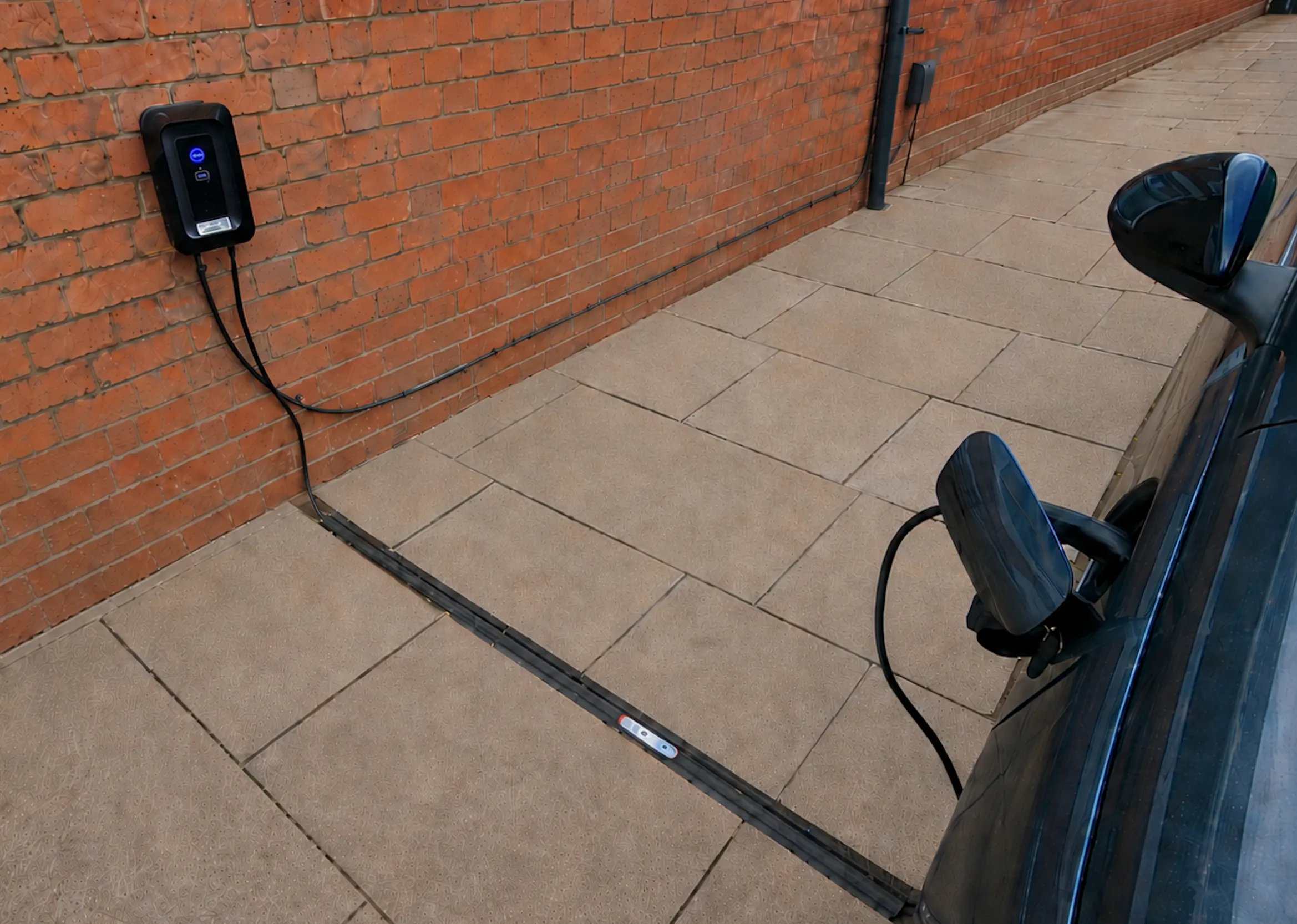
Cable Gullies in Scotland: EV Charging Without a Driveway (and the Wiring Nobody Mentions)
Scotland's cross-pavement pilot pays up to £3,500 toward a cable gully if you've no driveway. What the grant actually covers, how council permission works, and why your fuse board and a looped DNO supply can matter more than the pavement.