

Cable Gullies in Scotland: EV Charging Without a Driveway (and the Wiring Nobody Mentions)
Scotland's cross-pavement pilot pays up to £3,500 toward a cable gully if you've no driveway. What the grant actually covers, how council permission works, and why your fuse board and a looped DNO supply can matter more than the pavement.
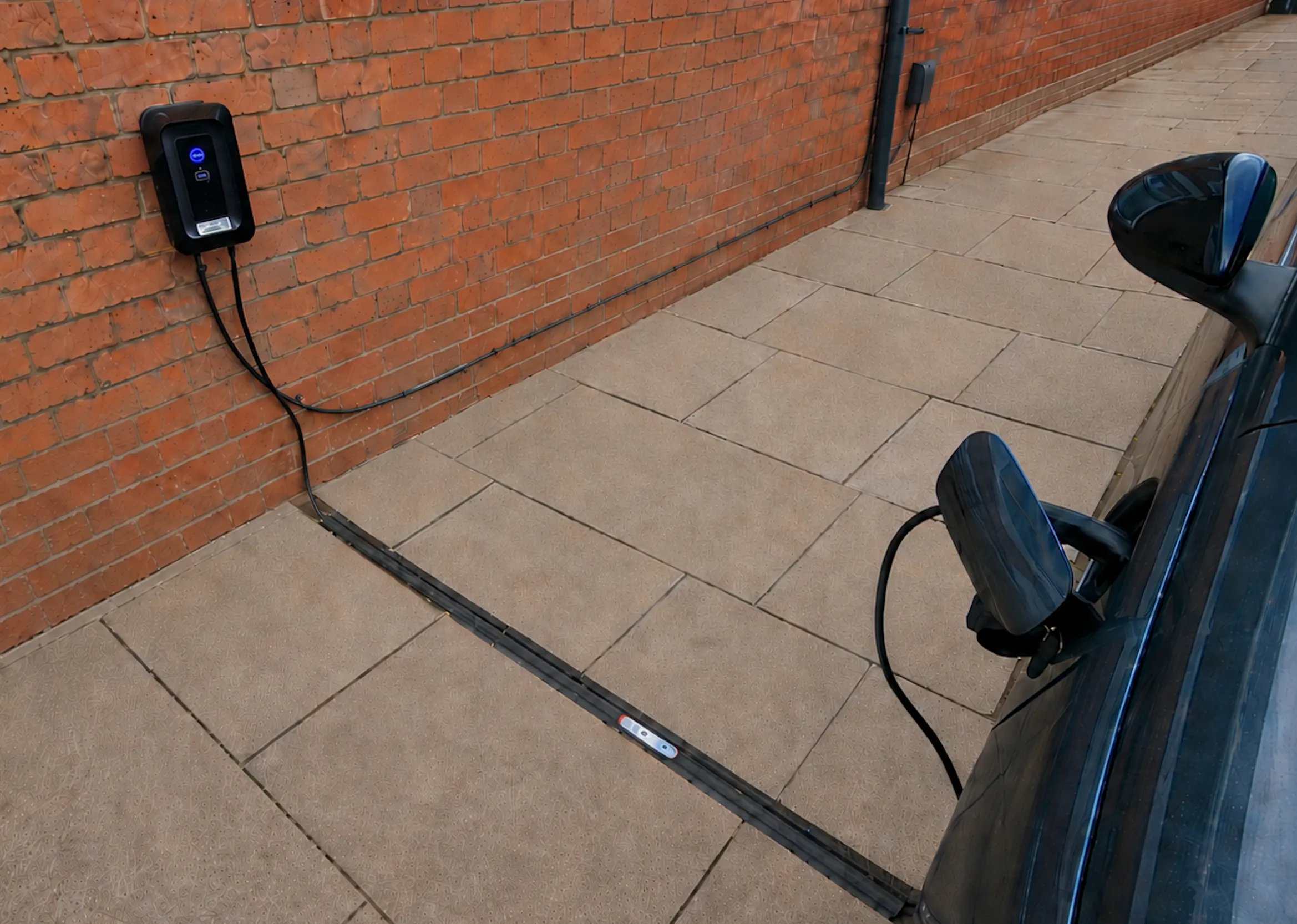
Cable Gullies and Cross-Pavement EV Charging in Scotland
The Quick Version
No Driveway, No Cheap Charging
Anyone running an electric car without a driveway knows the sums already, you're paying 50 to 75p a unit at public chargers while a neighbour two doors down charges overnight for 7 to 15p on a smart tariff. Same car, same miles, and the difference is a strip of tarmac.
And we understand the temptation to run an extension lead over the pavement. Please don't. It counts as an obstruction, it's a real trip hazard for anyone with a pram or a wheelchair, and the council will be in touch before long.
A cable gully is the proper fix. Narrow channel cut into the pavement between your boundary and the kerb, the cable lies in it flush with the ground, and a hinged lid closes flat when you unplug, people walk straight over it without ever noticing.
The £3,500 Pilot
Up to £3,500 per household is on the table from Transport Scotland and the Energy Saving Trust, but only in three council areas for now: East Lothian, Perth & Kinross and Renfrewshire. Paisley, Perth or Musselburgh, you can apply today. Stirling, Falkirk and Glasgow will need to wait, it's a pilot, though other councils have already told Transport Scotland they're interested, and wider rollout depends on how these first three areas go.
One thing we explain to every caller: the grant pays for the pavement works and nothing else. The saw cutting, the gully itself, reinstating the slabs afterwards, or a pop-up bollard at the kerb where a gully won't suit. The charger on your wall isn't included, neither is the wiring inside the house or a DNO supply upgrade if you turn out to need one. (The charger has its own grant now though. Since April 2026, OZEV pay up to £500 toward a chargepoint for households stuck with on-street parking, and a gully is exactly the kind of cross-pavement solution that qualifies. We'll confirm what you can claim before anything gets submitted.)
Eligibility is mostly common sense. Genuinely no off-street option, nowhere a charger could go without crossing the pavement, an EV owned, leased or on order (plug-in hybrids included, provided the model's on the OZEV eligible list), and a charge point going in as part of the project. The one people often miss: written council approval for your exact address, arranged in advance, not a phone call where somebody at the roads department sounded positive.
The Application Process: Paperwork First, Always
Critical: Apply Before Any Work Starts
Mandatory for:
- Grant offer letter from the Energy Saving Trust in your hand before any installation work begins
- Retrospective claims are refused, no exceptions. If work starts before the letter arrives, you won't be reimbursed
- Budget is first-come, first-served and can run out
Recommended for:
Note: First council contact to finished gully typically takes 6 to 10 weeks in our experience.
The council comes first, and it's the slow bit. You're asking East Lothian, Perth & Kinross or Renfrewshire for written approval in principle for a cross-pavement solution at your address. Where it goes sideways: listed buildings and conservation areas can bring extra planning consent into play, and if there's gas, water or BT ducting under the pavement, someone may want a utilities survey (a CAT scan) before agreeing where the channel can go. Renfrewshire run it through a road opening permit, which you pay for, and the fee doesn't come back if the grant gets knocked back. In a tenement, with the cable route crossing the common close or a shared garden, the factor or the owners' association gets a say as well, on top of the council. Allow plenty of time here.
After that, the quote. It needs to come from an approved installer and it needs to be properly itemised, because the Energy Saving Trust are only funding the pavement works and they want that figure sitting on its own line, separate from the charger, separate from any fuse board work. Get the VAT split out while you're at it. Chargers sit at 20%, solar or battery work on the same job is 0%, and the paperwork has to show which is which.
The application itself takes an evening. Online form, quote attached, council letter attached, decision back in roughly 8 working days.
Then you wait for the offer letter. Properly wait. Nothing gets dug, not one slab lifted, until it's in your hand, and an installer who offers to crack on while the paperwork catches up is volunteering to spend YOUR money, because retrospective claims get refused outright and you'd be covering the whole pavement bill yourself.
Once the letter lands the rest runs itself, book the install, photograph everything before and after, keep the invoices, claim when the work's done. The Energy Saving Trust aim to pay out inside 15 working days of your claim going in.
The Bit Most Guides Skip: Inside Your Property
£800 or £2,500. That's roughly the spread on your side of this project, and what decides where you land isn't the pavement, it's your fuse board and your meter cupboard. The gully gets all the attention because it's the bit you can see. It's also the simple bit. Most articles about the scheme stop at the kerb.
Your consumer unit
Start at the board. A 7kW charger (we'd normally fit a Zappi or an Ohme, sometimes a Hypervolt) pulls 32A for hours at a stretch and it gets its own dedicated circuit on a Type A RCBO, nothing else sharing it, that part isn't negotiable. Whether it's a quick job or a £500 one depends entirely on what's in your cupboard.
A modern board with a spare way, easy. No spare way, we add a small enclosure alongside and feed the charger from that. The expensive version is the old setup with BS 3036 rewirable fuses and not an RCD anywhere, which doesn't meet BS 7671 (the 18th Edition wiring regs) and gets replaced before any charger goes near it. Safety requirement, not an upsell, and a board that age was living on borrowed time anyway. £350 to £500.
Looped supplies, the tenement trap
Paisley, Perth, anywhere terraced and built before about 1980, there's a decent chance the houses share their electricity in a chain. The network operators (SP Energy Networks across the Central Belt, SSEN once you're up into Perthshire) didn't always run every property its own cable from the street transformer, the supply loops instead, into number 12, through the cutout and meter, back out the wall and into number 14. Tenements, same story, sometimes worse.
And a 60A service fuse doesn't leave much room. Cooker and shower already peaking at 35 or 40A, now add 32A of charger that holds it for six hours, the sums just don't work, the main fuse blows or the voltage sags until charging crawls or drops out altogether. On a bad loop, next door's lights dim whenever your car's plugged in. Try explaining that one over the fence.
Thirty seconds to check, mind. Open the meter cupboard and count the thick cables at the main fuse, eyes only, touch nothing. Two, with one heading off toward next door, you're looped. One cable into an 80A or 100A fuse, you can mostly stop worrying. We check it on every survey regardless.
The fix is usually built into the charger already. Any smart unit worth fitting does dynamic load balancing as standard, a CT clamp on the meter tail, the charger watching what the whole house draws, backing off when the shower kicks in, ramping up again after. On a 60A supply that's normally the entire answer. Where it isn't (all-electric heating hanging off the same fuse, say), you're into asking your DNO for a bigger supply: new cable from the street, a 100A service fuse, sometimes a new meter position, 6 to 12 weeks of lead time, and a cost anywhere from free under their connection obligations to £1,500 or more depending what they find when they dig. People ask about three-phase at this point. It exists, 100A per phase with a 22kW charger on its own leg, but for one house with one car it's overkill and we'd say so.
Cable routing
The run itself is the boring bit, 6mm² SWA outside, stepped up to 10mm² past about 20 metres so the voltage drop stays inside the 5% BS 7671 allows, every wall penetration sealed and fire-stopped. In a tenement, drilling through anything communal can need consent first. The factor again.
What It Actually Costs You
So with the £3,500 doing the pavement, what's actually left for you. Charger supplied and installed, £800 to £1,200. Board change if you need one, £350 to £500. Long or awkward cable runs add £150 to £400, and if you're looped and load balancing can't carry it, whatever the network operator quotes sits on top of everything else. Most straightforward jobs come out between £800 and £1,500, and against 50p a unit at the public chargers that money comes back quicker than people expect. The £500 OZEV grant knocks a decent chunk off the charger line too, if you qualify.
Outside the Pilot Areas?
Not in East Lothian, Perth & Kinross or Renfrewshire? The Scottish pavement grant isn't yours yet, but every word of the electrical side applies wherever you live, and some councils will still approve a cross-pavement solution if you fund the pavement works yourself. Worth a direct ask. And the charger money is UK-wide regardless, OZEV's on-street parking grant arrived in April 2026 and pays up to £500 toward the chargepoint itself, the catch being that a cross-pavement solution like a gully has to be part of the job.
Frequently Asked Questions
The things people actually ask us about gullies, grants and looped supplies.
Need an EV Charger Survey?
We survey, supply, and install EV chargers across Central Scotland, including cable gully projects. We'll check your consumer unit, DNO supply, and cable routing before you commit to anything.
OZEV-approved EV charger installers serving Stirling, Falkirk, Perth, Dunblane, Bearsden, and Central Scotland.
Related Articles
Continue reading with these similar topics
Do You Need a Fuse Box Upgrade for Your EV Charger?
A straight answer for Scottish homeowners on when an EV charger install needs a consumer unit upgrade, what BS 7671 Section 722 requires, and what it really costs.
How Much Does It Cost to Rewire a House in Scotland? (2026)
Central Scotland electrician explains what a full house rewire really costs, what pushes your quote up or down, and when a full rewire isn't needed.
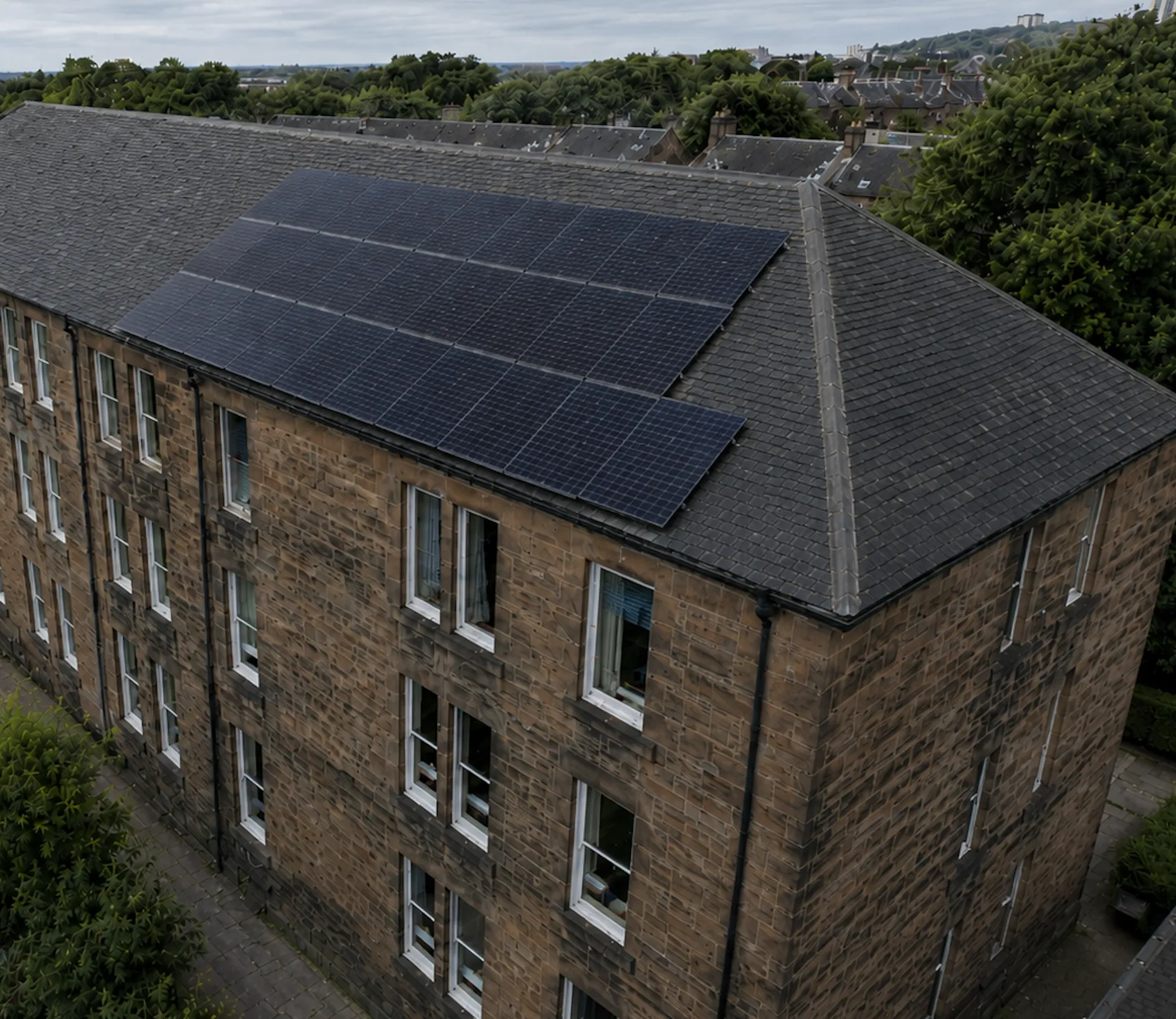
What's Possible with Solar Panels for Flats and Tenements in Scotland
Complete guide to installing solar panels on flats and tenements in Scotland. Learn about ownership, consent requirements, SolShare systems, costs, grants, and how to get your neighbours on board.